

Research team at CERS granted access to data set on gaming
Post-doctoral researchers Karl-Jacob Mickelsson and Minna Pura from CERS at Hanken in Helsinki, and Professor Mauri Kaipainen from Södertörn University in Stockholm, Sweden have been granted access to a large data set from the American Wharton Customer Analytics Initiative. The data set describes behaviours of individual players of a major sports video game, covering a three-year period. Mickelsson, Pura and Kaipainen are now digging in to this vast amount of data, with the topic Social in-game mechanics: effect on player journey, purchases and likelihood to become a promoter.
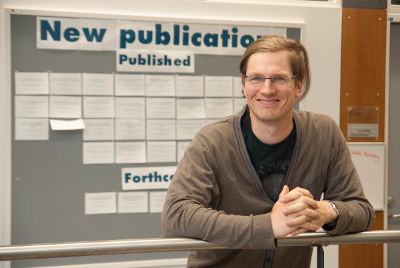
Mickelsson describes the data set as enormous, which gives the group a lot of possibilities, as well as challenges, regarding analysis and drawing conclusions. He says that they set out to explore how social gaming affects players’ behavior, with results that could give indications on whether social aspects of gaming matter to revenue. The data covers 60 000 players over three years, with more than 1,6 million sessions. Mickelsson, Pura and Kaipainen will among other things look at information on log-ins, which parts and modes of the game users are interacting with, and how social aspects, such as different multiplayer modes, affect these.
Research teams from around the world applied for access to the data set during the Spring of 2016, after which the proposals were evaluated based on their potential and relevance for both academic research as well as for the company sponsoring the data. Mickelsson, Pura and Kaipainen are in good company, as other teams that were granted access to the data come from esteemed universities, such as Massachusetts Institute of Technology, University of Arizona, and Erasmus University Rotterdam.
– We come from different universities, and have different skill sets, which I think is part of the reason why our proposal was accepted, comments Mickelsson.
Whereas Mickelsson does research on services and Pura is experienced in analytics and corporate consulting, Kaipainen has created his own interactive clustering tool for pattern finding.
– This enables us to conduct both broad quantitative analysis, and deeper descriptive analysis on different types of user profiles, Mickelsson explains.
The team will present their results in the U.S. next Summer, and in addition to contributing to academic research, their insights will also be usable by the sponsoring company, for example in the form of user profiling, which can help targeting and customization of offerings.
The Wharton Customer Analytics Initiative is a great example of how companies can benefit from sharing parts of the vast amounts of data they possess with the academic community. It could also be an inspiration for Finnish companies, for example in the data-rich IT-sector, to engage in collaboration with researchers.
For more information, please see the project website Opens in new window or contact Karl-Jacob Mickelsson at karl-jacob.mickelsson(at)hanken.fi