

Green Travel

What is considered green travel?
|
A trip from Helsinki to Berlin can be completed by combining ferry (Helsinki–Stockholm, 396 km) and train (Stockholm–Berlin, 811 km). Since at least 50% of the journey, 811 km of the total 1207 km, is by green transport the trip qualifies for the green travel grant.
How big is the green travel grant?
Students participating in an Erasmus+ exchange, internship, Summer or Winter School, as well as staff and teachers taking part in exchanges, are eligible to apply for the grant. The grant does not apply to freemovers.
The Erasmus+ green travel grant is based on the distance between Hanken and your host university. Use the Erasmus+ Distance Calculator to determine the distance and see your grant amount in the table below. When travelling green you can also get support for up to a total of 6 travel days (€16–18 per day), instead of the usual 2.
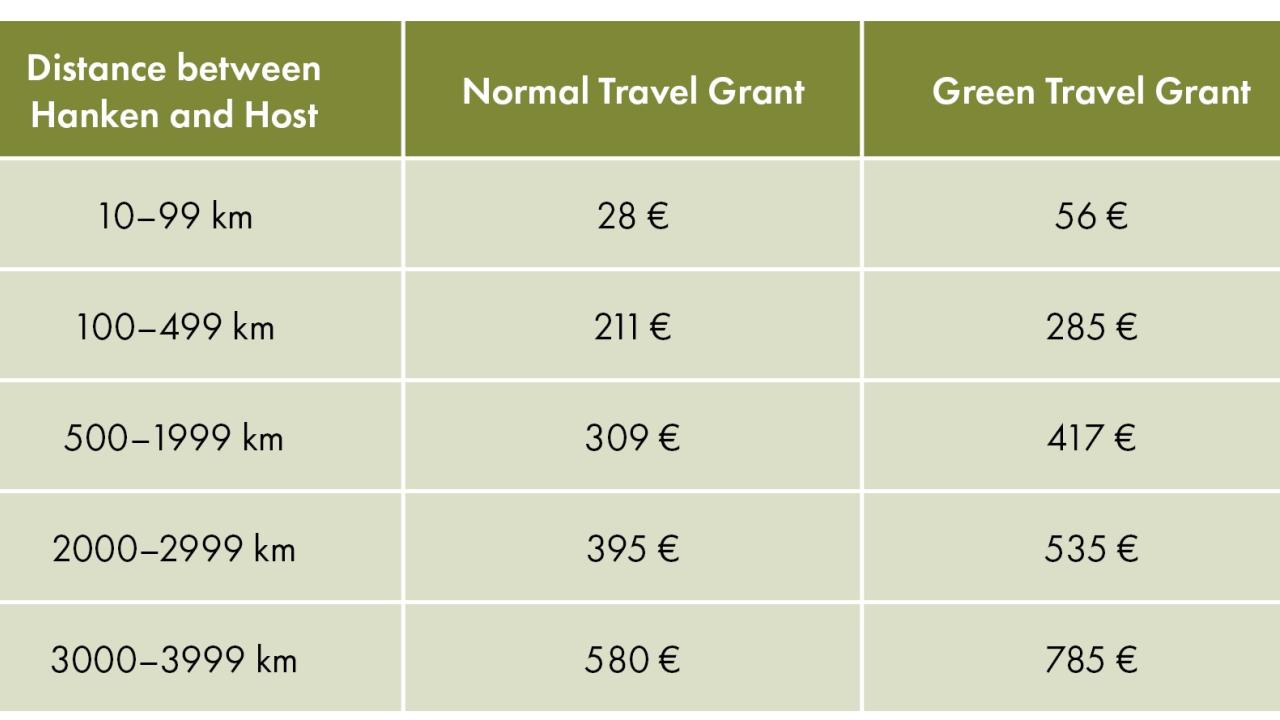
The grant for Helsinki to Berlin (1,207 km) amounts to a total of €453 since you get €417 for journeys of 500–1,999 km and €36 for two travel days (€18/day for Germany).
Why should I travel green?
|
Trains are the most environmentally friendly way to travel. Buses and carpooling are also better options than flying. If you must fly, choose a direct flight.
How do I plan my trip?
It is a myth that traveling by land is expensive and complicated! Use our tips when planning your green trip:
- Use benefits: Interrail Youth Pass, EURail Interrail Global Pass for Erasmus+
- Trip planners: Deutsche Bahn (also outside Germany), Google Maps, Maata pitkin matkustaminen, Rome2Rio
- Night trains: Night Train Map
- Buss trips: Flixbus, Comparabus
- Scenic train rides: Europe's 10 best scenic train rides
- Facebook groups: Tågsemester, Maata pitkin matkustavat
- Travel stories: Going on student exchange by train, Green travel ambassadors encourage green student exchange, The fair traveller's guide, 40 Green Travel Tips
If you know other students going to the same country, carpool for all or part of the trip. Compare your emissions from train, car, or plane using ecopassenger.com.
How do I apply for the grant?
|
For more information on green travel, visit the Green Erasmus website.